Golden swamp wallaby
A brightly coloured island form of the swamp wallaby, associated with dense understorey and recognised for its conservation significance.

South Stradbroke Island is home to agile wallabies and a distinctive golden form of the swamp wallaby. Their future depends on healthy habitat and thoughtful human behaviour—not close encounters.
Six ways to help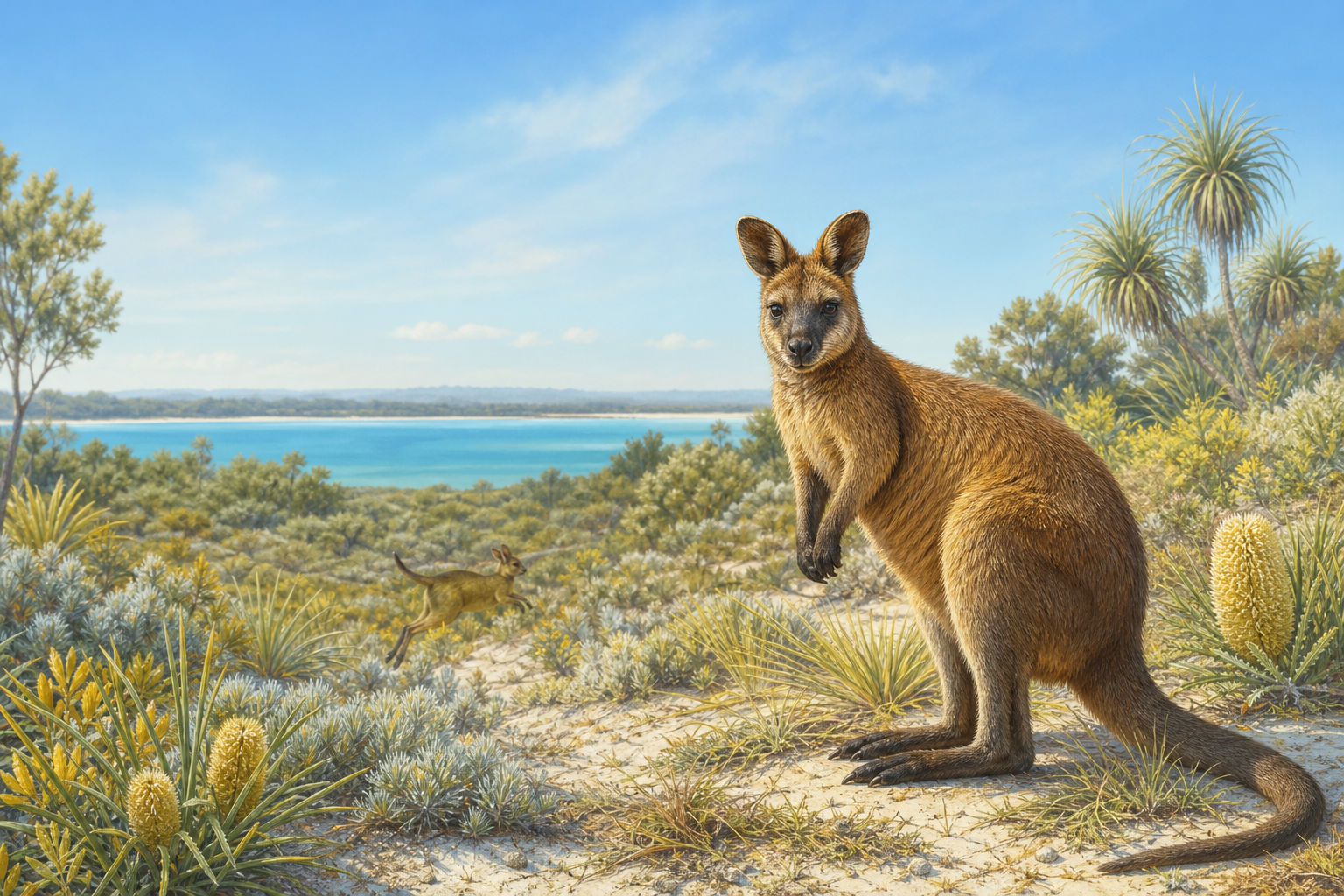
Queensland Parks describes the golden swamp wallaby as endemic to North and South Stradbroke islands. Its current island guide gives the more specific range as Peel, North Stradbroke and South Stradbroke islands. The City of Gold Coast calls the island form unique and of high conservation significance. Wallabies are protected native wildlife under Queensland law.
That does not mean this website should claim every dark-faced animal is a rare “black-faced wallaby”. The Queensland wildlife record for South Stradbroke Conservation Park lists agile wallabies and swamp wallabies. Coat colour and facial markings alone are not enough for a reliable identification.
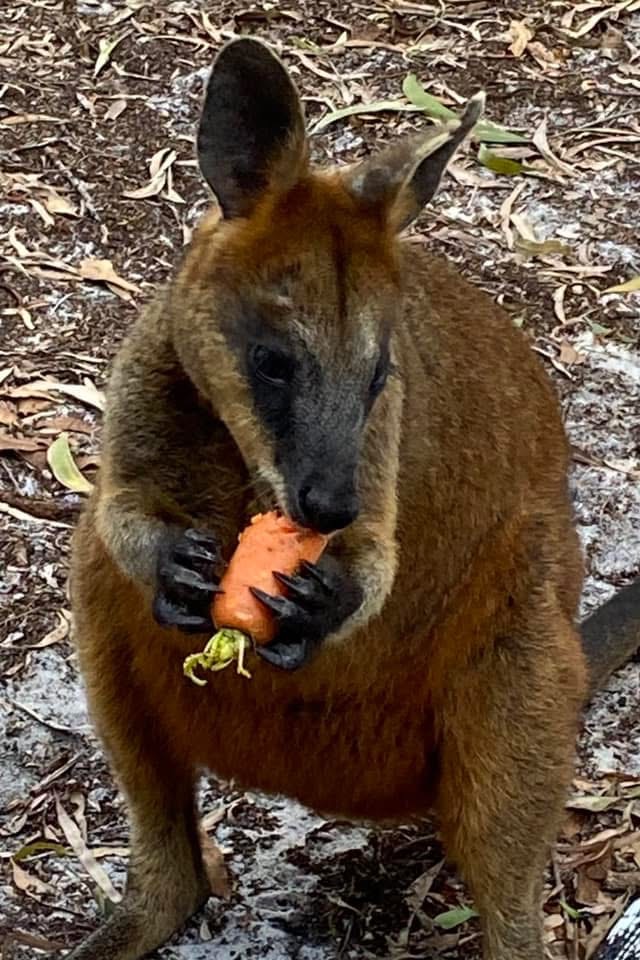
Dark facial markings make this a striking encounter, but a photograph alone is not enough to confirm whether an animal is an agile wallaby, a swamp wallaby or a particular island form.
The animal is shown eating a carrot. How it obtained the food is unknown; visitors should never feed wallabies or leave food where wildlife can reach it.
See the responsible wildlife guide →A brightly coloured island form of the swamp wallaby, associated with dense understorey and recognised for its conservation significance.
Also officially recorded on South Straddie. Queensland Parks says it was once common in the wider region and is often seen on the island.
Photograph quietly from a distance and note the date, location and habitat. Seek expert confirmation before assigning a species or rarity label.
Human food can alter natural behaviour, concentrate animals and contribute to stress, disease and nutritional problems. Feeding wildlife in protected areas is prohibited.
Watch quietly, use a zoom lens and leave an escape route. Never chase, touch, corner or pose with a wallaby.
Domestic animals are not permitted in the conservation park. Even brief contact or saliva can seriously harm wildlife.
Stay on established access routes, avoid trampling shelter vegetation, prevent weeds and support careful fire and habitat management.
Secure food and remove every scrap. Queensland Parks does not provide park bins because rubbish attracts wildlife and scavengers.
Where authorised vehicles or bikes operate, travel cautiously—especially around vegetation, campgrounds and during low-light hours.
Queensland Government guidance says to contact trained responders immediately. Even an animal that looks only slightly injured may have internal injuries.
1300 264 625
Follow the operator’s instructions. Licensed wildlife carers—not members of the public—should rehabilitate protected animals.Golden swamp and agile wallabies, park protection and visitor responsibilities.
Open source ↗Queensland Parks — island guideThe golden form is reported from Peel, North Stradbroke and South Stradbroke islands.
Open source ↗Queensland Wetland Info wildlife recordsSouth Stradbroke Conservation Park records include agile and swamp wallabies.
Open source ↗City of Gold Coast flora and faunaThe island form of the swamp wallaby is described as unique and of high conservation significance.
Open source ↗Queensland — living with wallabiesOfficial guidance on protected wildlife, safe encounters, feeding and offences.
Open source ↗Queensland — injured wildlifeOfficial response guidance and the 1300 ANIMAL contact.
Open source ↗iChecked 23 July 2026. Conservation status, taxonomy and records can change.
Help visitors understand that the best wallaby encounter is quiet, distant and on the animal’s terms.